
Gators Freshmen Bigs arrive in Gainesville with size, different basketball backgrounds and one clear challenge: finding minutes in a frontcourt that already has proven college production. As of September 22, 2026, Florida’s freshman post group is Jones Lay, Domen Petrovic and Artūras Butajevas, three young players entering a program where practice competition may say as much as early box scores.
That is the first thing to understand about this player-journey story. This is not a rebuild in the paint. Florida’s returning frontcourt already includes Rueben Chinyelu, Alex Condon and Thomas Haugh, with each player listed in the research as coming off a productive 2025-26 season. That kind of returning size can make life hard on freshmen, but it can also speed up development. For a young big, there are worse classrooms than a daily matchup with older, stronger teammates.
Gators Freshmen Bigs Enter A Crowded Paint
Why Gators Freshmen Bigs Start From Competition
The summer tone around the group was set before the first official game of the 2026-27 season. Florida’s athletic department noted on July 17, 2026, that one or two freshmen could have a chance to get into the rotation, but none were being handed a starting role before games began Florida summer update. That is a healthy message inside a locker room with championship expectations: opportunity is available, entitlement is not.
For the Gators Freshmen Bigs, the path begins with learning what SEC frontcourt minutes cost. Box-outs are not decorative work. Defensive positioning is not a footnote. Shot selection is not a suggestion. The research notes from Florida’s summer work specifically pointed to coaches pushing physicality, defensive positioning, box-outs, switches and shot selection, especially with Petrovic. That is the real freshman syllabus.
The Veteran Standard In Front Of Them
The returning group gives this story its edge. Chinyelu is listed at 6-foot-10 and is coming off 10.9 points and 11.2 rebounds per game in 2025-26. Condon is listed at 6-foot-11 with 15.1 points and 7.5 rebounds. Haugh is listed at 6-foot-9 with 17.1 points and 6.1 rebounds. Those numbers create a wall of experience in front of the freshmen, but they also create a daily measuring stick.
For Florida fans, that means early freshman progress may show up in smaller moments before it shows up in a major scoring role. A hard defensive switch, a second-effort rebound, a clean screen, a quick pass out of traffic — those are the plays that can earn trust before a young big earns touches. The paint is crowded, but that crowd can sharpen everybody.
Meet The Three Freshmen In The Frontcourt
Jones Lay Brings True Center Size
Jones Lay is the most traditional center profile of the group. ESPN lists him as a 7-foot, 230-pound center from Moravian Prep in Tabor City, North Carolina, and as a three-star recruit who committed on September 9, 2025 Jones Lay profile. That size alone makes him worth tracking, because Florida does not have to squint to see the role: rim protection, rebounding position, screen setting and interior finishes.
Still, being 7 feet tall is only the beginning in college basketball. The research notes say Lay flashed moments in scrimmages as of July 2026. That matters, but the next step is turning flashes into dependable possessions. Freshman centers often learn through contact. They learn how quickly college guards turn the corner, how hard veteran forwards carve out space and how little time there is to decide whether to help, recover or stay home.
Domen Petrovic Has A Forward’s Frame And Wing Notes
Domen Petrovic gives Florida a different shape. He is listed in the research as a 6-foot-9, 230-pound wing/forward from Slovenia who signed with Florida in May 2026. That description alone suggests positional range, but the coaching notes point to the work still in front of him. Physicality, defensive positioning and shot selection were all part of the summer feedback.
That kind of feedback is not a knock. It is coaching. Petrovic’s adjustment is about learning what shots fit Florida’s offense and what defensive habits travel against stronger players. A 6-foot-9 forward who can handle switches has value in modern college basketball, but the trust has to be earned one possession at a time. If he absorbs the physical side quickly, he could become a useful practice and rotation piece.
Artūras Butajevas Adds International Production
Artūras Butajevas brings the most international production in the research notes. Born March 27, 2007, he is listed at 2.05 meters, roughly 6-foot-9, and played for Unicaja Málaga in Spain’s ACB system before committing to Florida. The notes also list strong youth production: 14.4 points and 11.3 rebounds per game over seven games at the 2025 FIBA U17 Basketball World Cup, plus about 15.7 points, 5.4 rebounds and 1.3 assists across 21 games in Spain’s U22 PC with Unicaja during the 2025-26 European summer season.
The translation question is the story. European development can give a young frontcourt player passing feel, spacing habits and comfort away from the rim. SEC play asks for those skills under heavy contact and tight scouting. Butajevas does not need to become a finished product by November. He needs to prove which parts of his youth production can hold up when Florida’s practices and games get physical.
What Their Development Could Mean For Florida
Practice Reps May Shape The Rotation
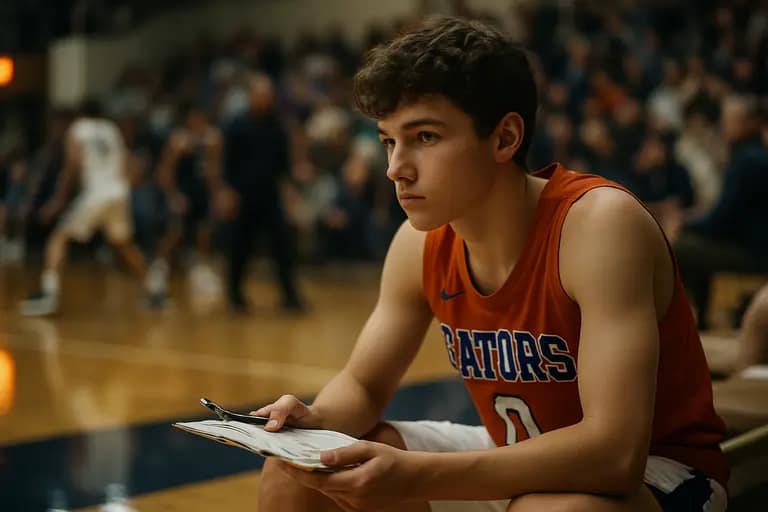
The Gators Freshmen Bigs may not open as headline players, but their practice impact can still be large. Deep teams often separate themselves because the second and third waves force the starters to work every day. If Lay challenges shots at the rim, Petrovic handles switches with more force and Butajevas brings scoring craft to the scout group, Florida’s veterans get sharper before the games count.
That is why this freshman group connects to the larger Gainesville basketball conversation. Florida is not just collecting size. It is trying to build a frontcourt room where development is part of the competitive identity. For a closer view of how the young bigs have been tested in practice, the related breakdown on freshmen frontcourt coaching fits the same theme: hard corrections now can matter later.
Small Roles Can Still Swing Big Nights
Not every freshman big needs 25 minutes to matter. Sometimes the assignment is six minutes without a defensive mistake. Sometimes it is two rebounds before a media timeout. Sometimes it is simply giving a veteran a breather without changing the team’s identity. That is where freshmen can help a deep roster without needing the offense built around them.
Florida’s staff, based on the July 2026 notes, appears to be treating the group with that balance: demand more, promise less, reward what holds up. Fans watching the box score may want instant proof. Coaches usually want repeatable habits first. The player journey for these three freshmen could be less about a sudden leap and more about stacking enough trusted possessions to change the rotation math.
Why Gators Freshmen Bigs Matter In Gainesville
The Gators Freshmen Bigs matter because they represent both insurance and future upside for a program with veteran frontcourt strength. Lay gives Florida true center size. Petrovic gives the staff a big forward profile with switch potential. Butajevas brings international experience and youth production that will be tested in a new setting. None of those paths are identical, which is what makes the group worth watching.
For the Gainesville community, player development is part of the fun. Fans remember the finished version, but seasons are often shaped by the early work nobody sees: summer corrections, fall scrimmages, weight-room gains and the first time a freshman stops thinking and simply reacts. As of September 22, 2026, Florida’s frontcourt story starts with proven veterans. The next layer is whether one or two young bigs can earn enough trust to join the fight.